 How-to
How to Make Coffee While Camping Without Electricity
Last Updated: November 19, 2026
Quick Summary
Knowing how to make coffee while camping without electricity comes down to your heat source: boil water over a campfire or camp stove, then brew with coffee bags, a pour-over, French press, or the settle-and-pour method. With no heat at all, pack cold brew made ahead, instant coffee, or ready-to-drink coffee.
- Build a campfire and let it burn down to hot coals before boiling water, since flames soot the pot and heat unevenly.
- For cold brew made ahead, steep coarse grounds at about one part coffee to four parts water for 12 to 18 hours.
- Use two tablespoons of coffee per six ounces of water and steep four minutes for French press, pour-over, and coffee bags.
- Pack out used coffee grounds rather than burying them, because burying them is not Leave No Trace.
- A travel press brews and travels in one vessel, so you drink from the same container with no separate mug to wash.
Table of Contents
- Camping Coffee Without Electricity: What Actually Matters
- How to Make Coffee Without Electricity or Gas
- Campfire Coffee: Boiling, Steeping, and Settling Grounds
- Coffee Bags, French Press, Pour-Over, and Percolator Methods
- The Easiest Way to Make Coffee While Camping
- Choosing a Camping Coffee Maker for Your Setup
- Exact Ratios, Timing, and Repeatable Recipes
- Water Use, Cleanup, and Leave No Trace Disposal
- Safety and Campsite-Specific Rules for Hot-Water Brewing
- Stocking Your Camp Coffee Kit Before Your Next Trip
- Frequently Asked Questions
Camping Coffee Without Electricity: What Actually Matters
Knowing how to make coffee while camping without electricity comes down to several methods, but the real question is what heat source you have. A camp stove, a campfire, or no flame at all each opens a different set of options. The people who enjoy their morning coffee most are usually the ones who picked a brew method before they packed, not at 6 a.m. with cold hands.
The distinction that trips people up is "no electricity" versus "no heat." Boiling water still needs a camp stove or campfire. If fires are banned at your site, you need a method that works with water you heated elsewhere, or a no-cook option.
Below, we'll walk through every method, the exact ratios that make each one repeatable, and how to choose based on how you camp.
How to Make Coffee Without Electricity or Gas
"No electricity" and "no gas" are two different problems, and most guides blur them. Without electricity you can still boil water on a campfire. Without gas and without a fire, because of a burn ban, a stove-free site, or a forgotten fuel canister, you cannot boil water at all, and the whole method list changes.
Start by naming which situation you are in.
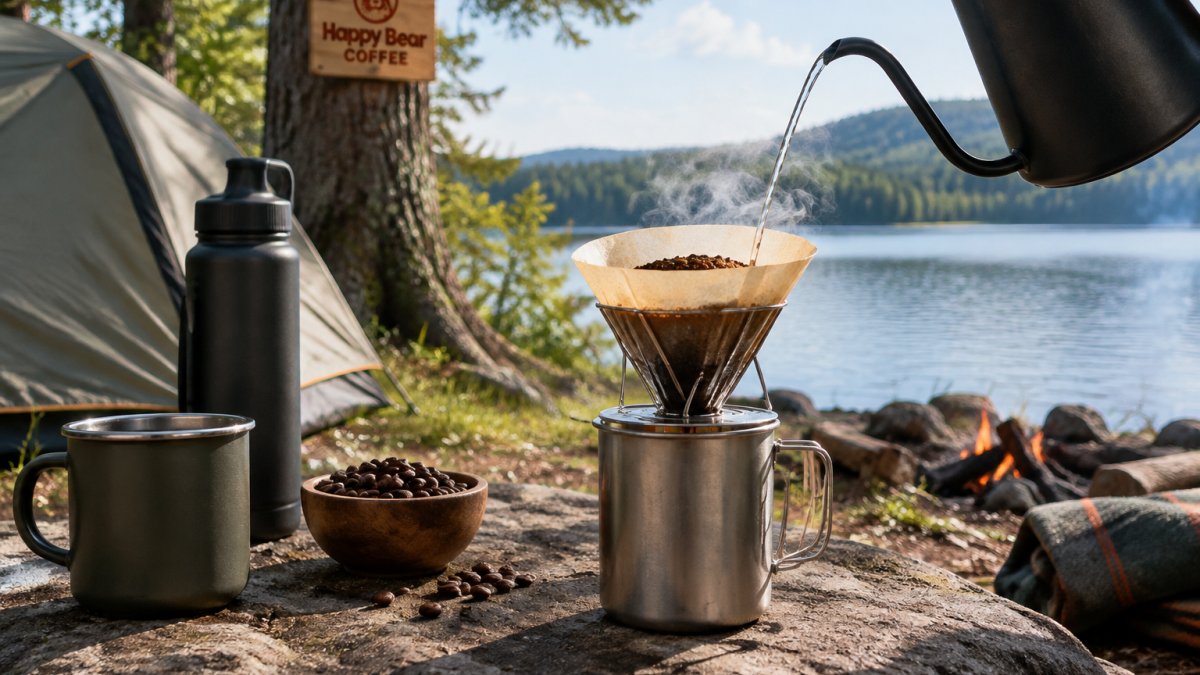
Situation A: You have a campfire. Boil water over hot coals, then brew with any method that needs no power. Build the fire and let it burn down to coals, not open flame, because flames lick the sides of the pot and soot it while the water heats unevenly. Boil in a kettle or lidded pot, pull it off before it rolls over, and brew with a coffee bag, pour-over cone, French press, or the settle-and-pour method. Wind is the enemy here: a fire that struggles in a breeze boils water slowly, so pick a sheltered spot and build a windbreak from rocks. The US Forest Service guidance on campfire safety is worth reading before you rely on a fire for your morning coffee. Once the coals are steady and the pot is off the fire, the same careful heat management can help you bake bread over a campfire.
Situation B: You have a camp stove but no fire. This is the common case during fire bans. A canister stove or liquid-fuel stove can boil water quickly, and may be allowed when open fires are not. Brew exactly as in Situation A, using the stove as the heat source. Keep the stove on a stable, level surface away from the tent, and never run it inside a tent or vestibule.
Situation C: You have no heat source at all. No fire, no stove, no fuel. This is where most articles stop, and it is the situation the keyword actually describes for a lot of searchers. Your realistic options are:
- Cold brew made ahead. Steep coarse ground coffee in cold water at a ratio of about one part coffee to four parts water by volume, cover it, and let it sit 12 to 18 hours. Strain the grounds before you leave, carry the concentrate in a sealed bottle, and dilute it with water at camp. It needs no heat and no brewer at the site.
- Instant coffee. The lightest, most reliable no-heat option. Add a spoonful to hot or cold water, stir, and drink. Specialty instant comes in single-serve packets that pack flat.
- Ready-to-drink coffee. Canned or bottled cold brew travels in your pack and needs nothing but a way to open it. It is heavy per cup, so it suits short trips.
- Coffee bags with cold water. A coffee bag steeped in cold water for several hours makes a weak but drinkable cold brew in a pinch. It is not the same cup as hot-steeped coffee, but it works when nothing else does.
Watch out: do not assume you can improvise hot water without a stove or fire. If hot coffee matters to you, pack a stove or a fuel source as your backup.
Carrying one no-heat option even on trips where you expect a fire is a sensible backup. Fire bans can appear with little notice, and fuel canisters can run out.
Campfire Coffee: Boiling, Steeping, and Settling Grounds
Campfire coffee is the oldest method there is: boil water, add ground coffee, let it steep, let the grounds settle, and pour carefully. It needs no filter and no brewer, just a pot and a mug.
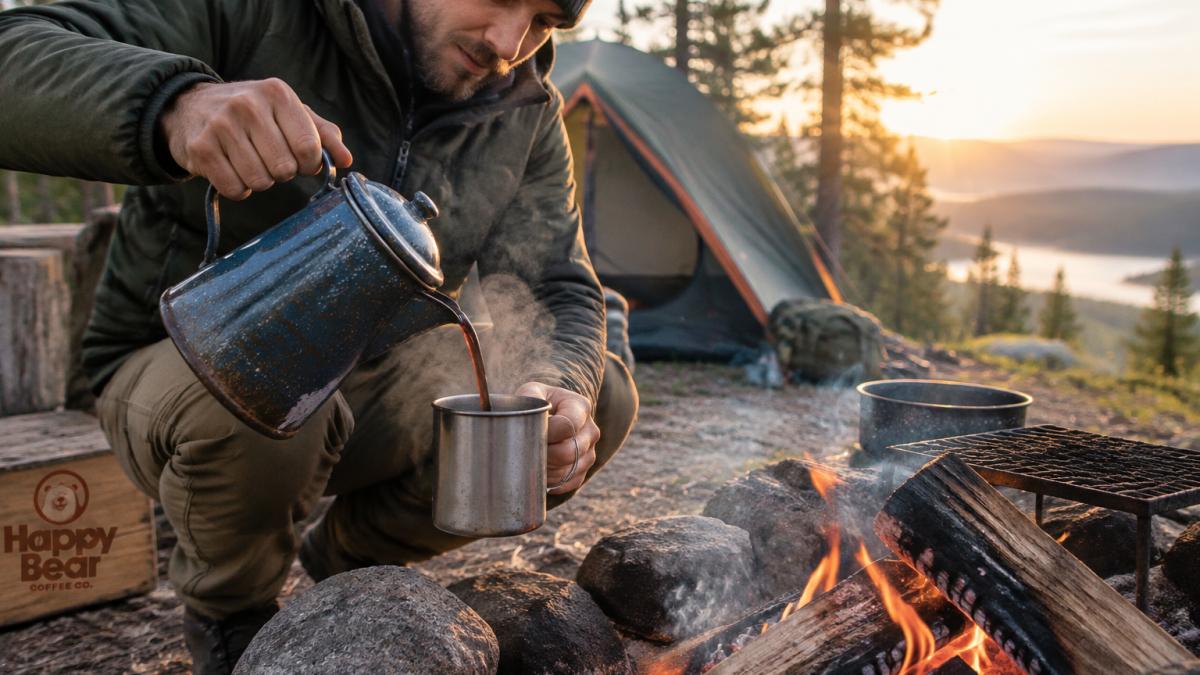
The steps are simple:
- Bring water to a boil in a pot.
- Pull the pot off the heat and let it calm for a moment.
- Add coarse ground coffee, about two tablespoons per cup.
- Stir once, cover, and steep for four minutes.
- Tap the pot to settle the grounds, then pour slowly.
A common mistake is pouring the grounds in while the water is still at a rolling boil. They foam up and you lose half the pot. Another is skipping the coarse grind: fine grounds turn the cup muddy and gritty.
The honest drawback is taste. As Eat Sleep Wild's camping coffee guide notes, the settle-and-pour method can taste unpleasant if you rush it. Steep long enough and pour gently, and it's a solid cup.
Coffee Bags, French Press, Pour-Over, and Percolator Methods
Each of the four main camp brewers suits a different camper. Here's how they compare before we get into the details.
| Method | Gear Needed | Grind | Best For | Cleanup |
|---|---|---|---|---|
| Coffee bags | None beyond a mug | Pre-ground | Backpacking, no-heat trips | Trash only |
| French press | Press | Coarse | Car camping, groups | Rinse and wipe |
| Pour-over | Dripper and filter | Medium | Light packers | Toss the filter |
| Percolator | Percolator pot | Coarse | Larger groups | Rinse the basket |
Coffee Bags and Steeping
Coffee bags work like tea bags: drop one in a mug, add hot water, steep four to five minutes, and lift it out. They need no brewer and no filter, which makes them the lightest option for backpacking.
Steeping time matters. Too short and the cup tastes weak; too long and it turns bitter. Four minutes is a good starting point, then adjust to your taste.
French Press Brewing
A French press gives you the fullest body of any camp method. Add coarse ground coffee to the press, pour hot water over it, wait four minutes, then plunge slowly.
The coarse grind is not optional. Fine grounds slip past the mesh and leave grit in the cup. A French press built for camp use with a grounds-stopping filter solves most of that problem.
Pour-Over Brewing
Pour-over rewards a little patience. Set a filter cone over your mug, add medium ground coffee, and pour hot water in slow circles. A collapsible pour-over maker packs flat and needs no electricity at all.
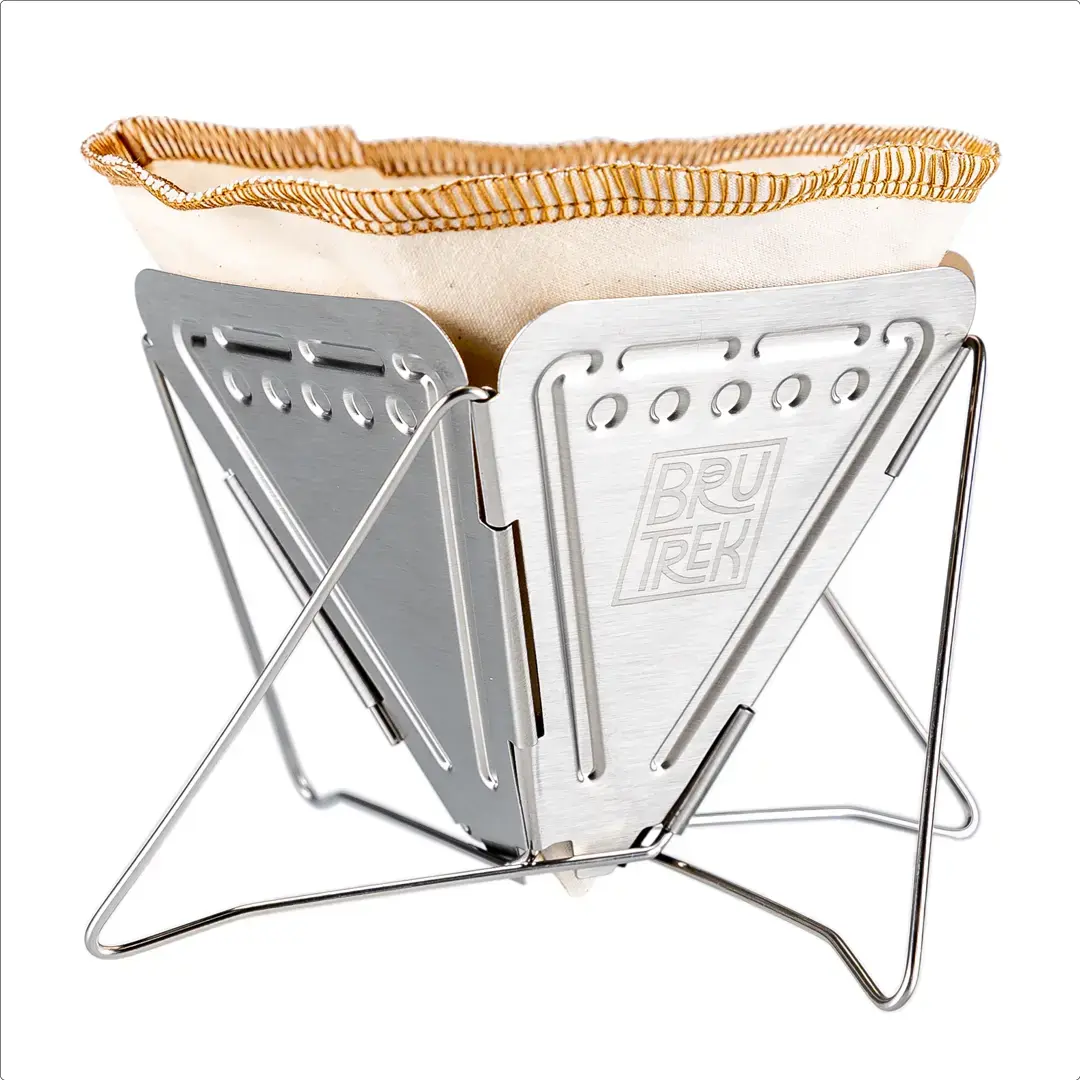
The trick is the pour. Dump the water in all at once and it runs through too fast, leaving a thin cup.
Percolator Brewing
A percolator sits right on the coals and cycles water up through the grounds. It suits larger groups because one pot makes several cups at once.
Watch out: percolated coffee keeps cycling the same liquid, so it gets stronger and harsher the longer it stays on the heat. Pull it off as soon as it's done.
The Easiest Way to Make Coffee While Camping
One simple answer to how to make coffee while camping without electricity is a travel press that brews and travels in one vessel. You add coffee and hot water, wait, plunge, and drink from the same container. No separate mug, no filter, no second pot to wash.
For campers who want the shortest path from boiling water to a hot cup, a travel coffee press like the OVRLNDR® does exactly that. It's built from stainless steel with double-walled insulation, so the coffee stays hot while you drink it. The Bru-Stop™ plunger is designed to prevent over-extraction, and the sip-and-snap lid is designed to prevent spilling.
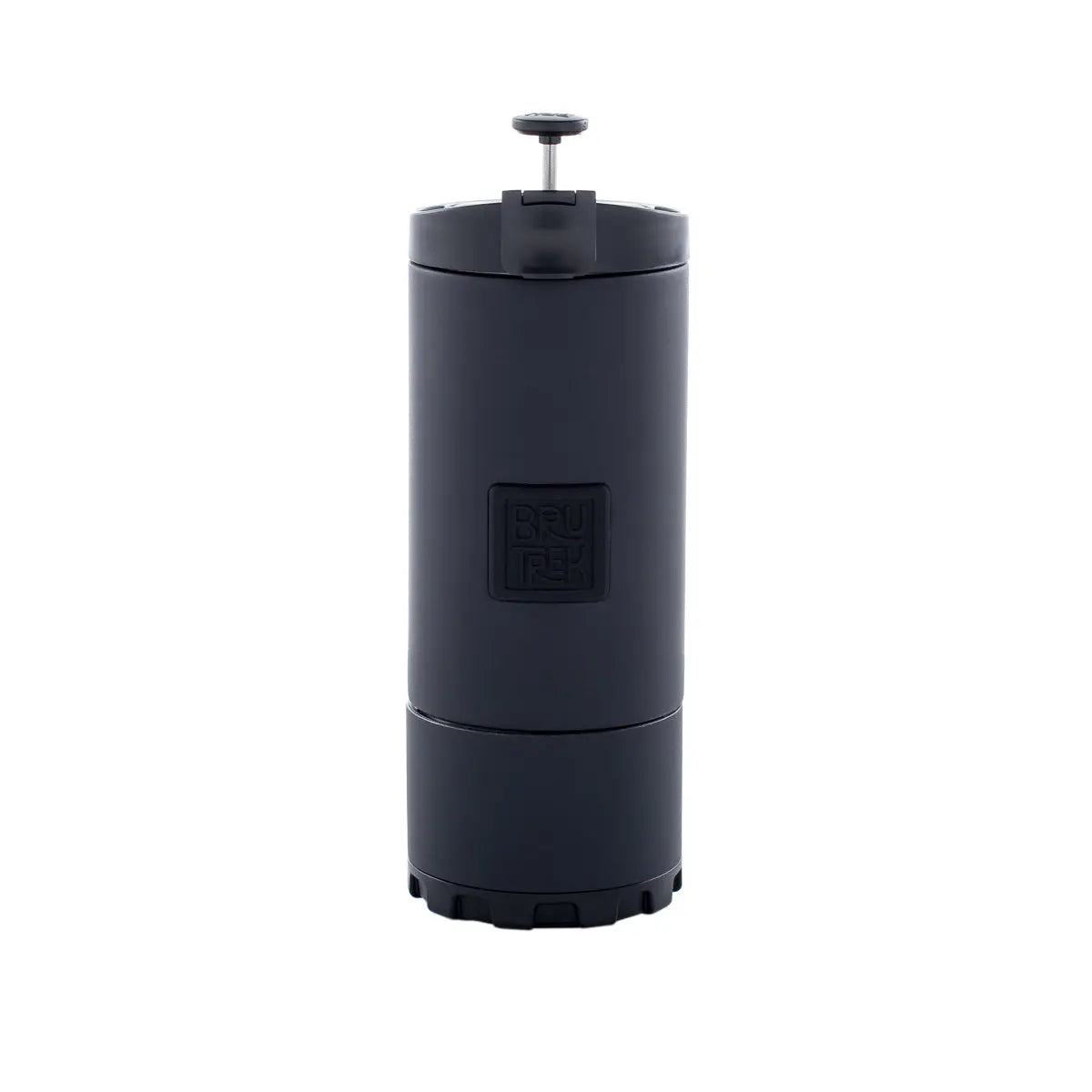
Is it the lightest option? No. Coffee bags still win on weight. But for car camping and base camps, one vessel that does everything is hard to beat.
Choosing a Camping Coffee Maker for Your Setup
Most camp coffee guides hand you a list of brewers and leave the choosing to you. That is backwards. The brewer should fall out of your constraints, and there are only four that matter: how you travel, how many people you feed, how much water you can spare, and whether you are allowed a flame at all.
Work through them in this order.
1. How are you traveling? Weight and pack volume decide more than anything else. A backpacker counting ounces should not carry a glass French press or a steel percolator. A car camper with a Rubbermaid bin has no reason to settle for a coffee bag.
2. How many cups at once? A solo hiker needs one mug. A family of five at a picnic table needs a pot that makes four to six cups in a single pass, or everyone waits through three rounds of pour-over.
3. How much water can you spare for cleanup? Every brewer you have to wash costs water you carried in. On a dry camp, that is the deciding factor, not the coffee quality.
4. Is a flame allowed? Fire bans and stove-only campgrounds change the answer entirely. If you cannot heat water, no brewer on the list helps you.
Here is how the four common setups shake out against those constraints:
| Camping style | Best fit | Why | Main trade-off |
|---|---|---|---|
| Backpacking, solo | Coffee bags | No brewer, no filter, trash-only cleanup | Limited strength control |
| Backpacking, two or more | Collapsible pour-over | Light, packs flat, brews by the cup | Needs a steady pour |
| Car camping, couple | French press or travel press | Full body, easy to repeat | Rinse water needed |
| Car camping, group of four-plus | Percolator | One pot serves everyone | Over-extracts if left on heat |
| Fire ban, stove allowed | Coffee bags or pour-over with stove-heated water | Works with any hot water source | Still needs fuel |
| No heat source at all | Cold brew made ahead or instant | No flame required | Planning ahead |
A common pattern is that people buy the brewer first and discover the mismatch at camp. The camper who bought a percolator for solo backpacking carries two pounds of steel for one cup. The camper who bought coffee bags for a six-person car camp spends the morning making one mug at a time.
Watch out: do not buy a brewer that needs a grind you cannot produce at camp. Whole-bean coffee and a coarse-grind brewer means packing a hand grinder. If you are not bringing one, have the beans ground to the right size before you leave, and tell the shop which method you are using.
If you camp more than one way, the honest answer is two brewers, not one compromise. A coffee bag stash for the pack and a French press for the car covers almost every trip you will take.
Exact Ratios, Timing, and Repeatable Recipes
Good camp coffee comes down to two numbers: how much coffee and how long. Get those right and the method barely matters.
Use this as your baseline:
- Ratio: two tablespoons of coffee per six ounces of water.
- Steep time: four minutes for French press, pour-over, and coffee bags.
- Percolator: brew until the pot just starts to perk, then pull it off.
- Water temperature: just off the boil, not rolling.
A 2-tablespoon coffee scoop takes the guesswork out of measuring when you're half awake. Write your ratio on a card and tape it inside your camp box, so you repeat the same cup every trip.
Water Use, Cleanup, and Leave No Trace Disposal
Cleanup is where camp coffee gets hard, especially when water is limited. A camper on a Reddit camping forum said French-press cleanup was difficult with limited water and switched to buying coffee instead. That's a real problem, and it's solvable.
- Use fewer dishes. A travel press or coffee bag means one mug to wash.
- Wipe before you rinse. A paper towel lifts most grounds before they hit water.
- Pack out used grounds. Burying them isn't Leave No Trace, even though it's common advice.
- Skip soap near water sources. Rinse well away from streams and lakes.
If cleanup is your main worry, our guide on how easy portable coffee gear is to clean breaks it down by brewer type.
Safety and Campsite-Specific Rules for Hot-Water Brewing
Hot water and open fire are the two risks in camp coffee, and both are easy to manage. Keep your stove or fire well away from the tent, never leave a pot unattended, and let coals die out completely before you sleep.
Follow the rules of the site you're on. Many campgrounds ban open fires during dry periods, and some require a stove only. Check before you go, and always have a no-fire backup method packed.
The National Park Service campfire regulations vary by park, so confirm the rules for your specific site rather than assuming.
Stocking Your Camp Coffee Kit Before Your Next Trip
A good camp coffee kit is small, and it saves you from improvising at dawn. Pack it once, keep it packed, and you'll never brew a bad cup in the woods again.
Here's the checklist:
- Coffee, ground coarse or whole bean with a hand grinder
- Your brewer of choice
- A kettle or pot for boiling water
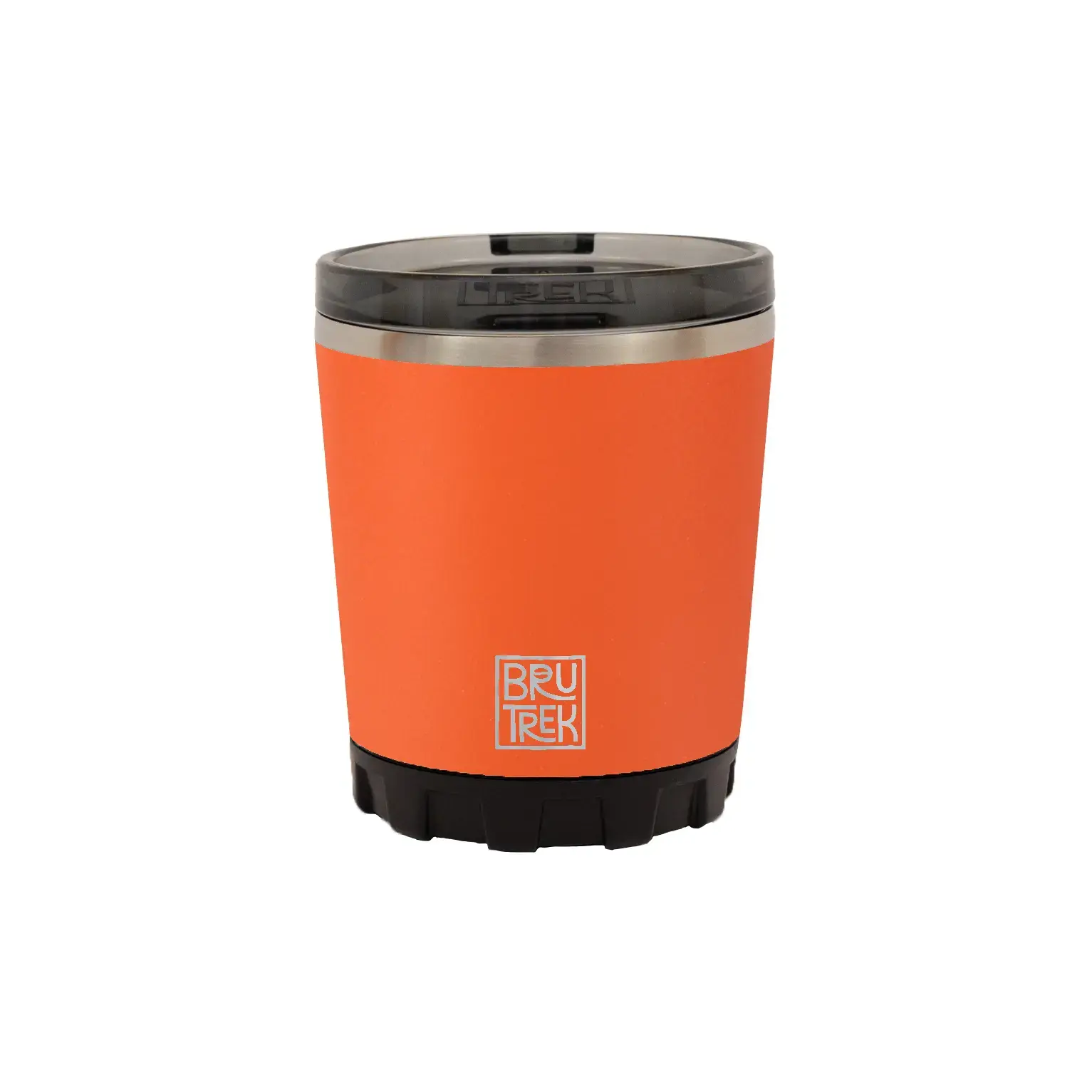
- A rugged camp cup that keeps coffee hot
- A scoop for measuring
- Paper towels for cleanup
- A sealed bag for packing out used grounds
Happy Bear Coffee roasts in small batches and is based in Birdsboro, PA. Happy Bear Coffee uses 100% Arabica beans, and its decaf uses the chemical-free Swiss Water Process.
Packing for a trip shouldn't mean settling for bad coffee. Happy Bear Coffee offers small-batch specialty beans, camp-ready brewers like the OVRLNDR® travel press, and single-serve brew bags that fit in any pack. Every online order sends 5% to a nonprofit you choose at checkout. Get started with Happy Bear Coffee and brew a better cup at your next campsite.
Frequently Asked Questions
How do you make coffee while camping without electricity?
Heat water over a campfire, camp stove, or any safe heat source, then brew with a method that needs no power. Coffee bags steep like tea in about 4 to 5 minutes. A French press needs 4 minutes of steeping before you plunge. Pour-over takes 2 to 3 minutes of slow pouring. Percolator and cowboy coffee both rely on boiling and settling. All four approaches use only ground coffee, hot water, and a mug or pot.
What camping coffee maker works without electricity?
A camping coffee maker for powerless trips is any manual brewer: a travel French press, a collapsible pour-over cone, a percolator, or single-serve steep bags. The Happy Bear Coffee single-serve brew bags need nothing but a mug and hot water. The OVRLNDR Travel Coffee Press brews 24 fluid ounces. The collapsible pour-over weighs just 6.5 ounces and packs into a wax canvas bag.
Can you make coffee while camping without a camp stove?
Yes. A campfire works, and so does any method that does not need heat at all, such as cold brew steeped overnight in a sealed jar. If fires are banned and you have no stove, cold brew is the reliable fallback. Pack coarse grounds, add cold water at roughly a 1:8 ratio by weight, steep 12 to 16 hours, then filter through a reusable cloth or fine mesh before drinking.
How do you clean a coffee maker at camp?
Rinse immediately with a small amount of hot water before grounds dry. For a French press, unscrew the removable base and wipe the mesh. For pour-over, turn the cloth filter inside out and rinse. Pack used grounds out in a sealed bag rather than scattering them, and strain any leftover liquid before disposing of it. A dedicated camp rag kept in a zip bag handles most cleanup with very little water.