 ultimate-guide
Why Specialty Coffee Costs More: The Full Price Breakdown
Table of Contents
- Why Specialty Coffee Is More Expensive Than Regular Coffee
- What Affects Coffee Prices From Farm to Cup
- Climate Change and Supply Pressure
- Specialty Coffee vs. Regular Coffee: What's the Real Difference?
- Fair Trade vs. Direct Trade Coffee: Where Your Money Goes
- Is Specialty Coffee Worth the Extra Cost?
- How to Buy Specialty Coffee on a Budget
- Frequently Asked Questions
Last Updated: October 11, 2026
Why Specialty Coffee Is More Expensive Than Regular Coffee
When you pick up a bag of specialty coffee, the price tag often makes you pause. A pound of specialty coffee might cost two or three times what you'd pay for commodity coffee at the grocery store. The difference isn't just marketing, it reflects real, measurable factors that add up from farm to cup.
Specialty coffee more expensive than regular coffee because of how it's grown, harvested, processed, and handled at every stage. The supply chain for specialty coffee demands attention to detail that commodity coffee doesn't require.
The gap between specialty and commodity coffee isn't arbitrary. Understanding where that cost comes from helps explain why specialty coffee more expensive remains a worthwhile investment for people who care about flavor, quality, and how their money flows through the supply chain.
What Affects Coffee Prices From Farm to Cup
Coffee prices are determined by a cascade of decisions and conditions that begin in the soil and end in your cup. Each step introduces costs that specialty coffee producers refuse to cut corners on. Understanding the full price chain, from green-bean cost to retail price, reveals why specialty coffee commands a premium and where your money actually goes.
The Price Breakdown: From Farmer to Cup
When you pay $16 for a pound of specialty coffee, that money doesn't go entirely to the farmer. The retail price is divided among multiple stakeholders, and the split differs significantly between specialty and commodity coffee.
For a typical specialty coffee bag at retail:
- Farmer/farm gate: 25-35% of retail price. A farmer selling green beans at $3-4 per pound to an exporter receives roughly $4-5.60 per pound of roasted coffee equivalent (accounting for weight loss during roasting). On a $16 bag, that's $4-5.60.
- Exporter and importer: 10-15%. These middlemen handle logistics, quality checks, and documentation. On a $16 bag, roughly $1.60-2.40.
- Roaster: 20-30%. This covers roasting equipment, labor, packaging, storage, and overhead. On a $16 bag, $3.20-4.80.
- Retailer: 15-25%. Whether online or brick-and-mortar, the retailer covers rent, staff, shipping, and profit margin. On a $16 bag, $2.40-4.
- Taxes and fees: 5-10%. Sales tax, import duties, and regulatory compliance. On a $16 bag, $0.80-1.60.
For commodity coffee at $6 per pound, the farmer typically receives only 10-15% of the retail price (roughly $0.60-0.90), because commodity buyers prioritize volume and cost-cutting over quality premiums.
Growing Conditions and Altitude
High-altitude coffee tastes better. Coffee plants grown at elevation, typically between 2,000 and 6,000 feet, produce denser beans with more complex flavor compounds. The volcanic soil in regions like the highlands of Peru or Tanzania creates naturally mineral-rich growing conditions that commodity coffee simply doesn't pursue.
This elevation requirement limits where coffee can be grown profitably. Not every region has mountains suitable for specialty coffee cultivation. Farmers who commit to high-altitude growing invest in land that's harder to access, requires more careful management, and produces smaller yields per acre than lower-altitude commodity operations. High-altitude farms often yield 1,000-1,500 pounds per acre; commodity farms at lower elevations may yield 2,000-3,000 pounds per acre. That yield difference directly affects per-unit costs and justifies higher prices.
Harvest and Labor Costs
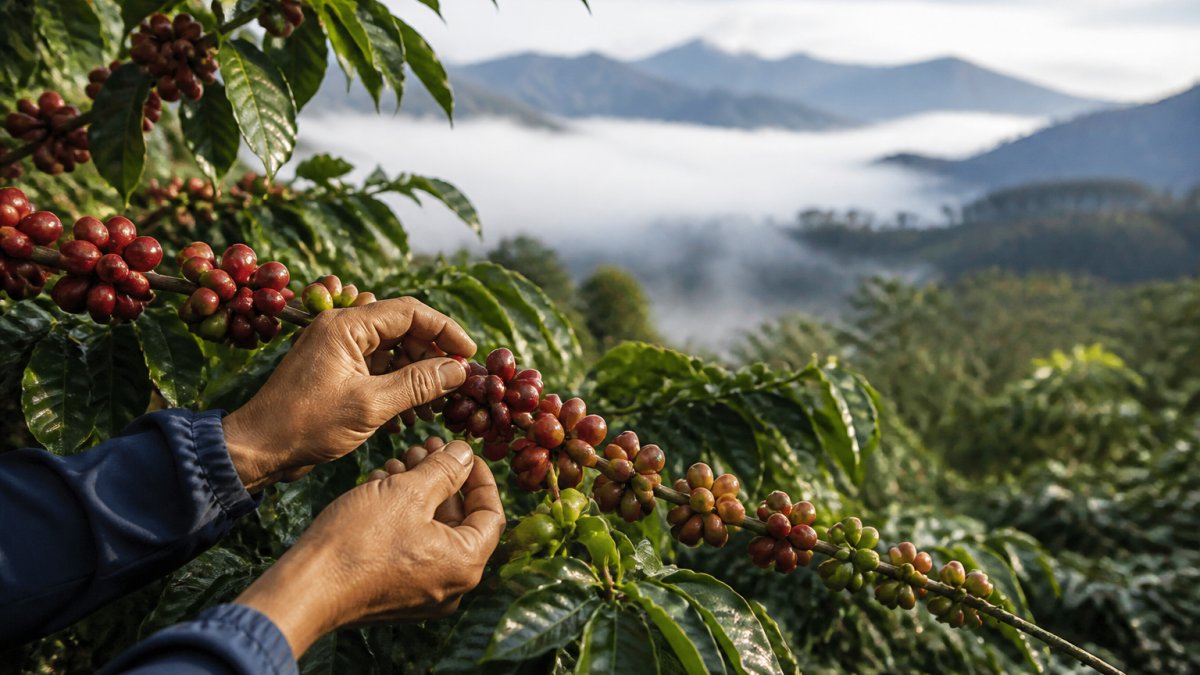
Commodity coffee is harvested mechanically or by workers paid minimal wages to strip entire branches. Specialty coffee is picked by hand, cherry by cherry, selecting only the ripe fruit. This selective harvesting takes longer, costs more, and requires skilled workers who understand when a cherry is at peak ripeness.
The difference in labor intensity is substantial. A mechanical harvest might process an entire field in days. Hand-picking the same field takes weeks. The workers doing this labor deserve fair compensation, and specialty coffee producers recognize that paying living wages is part of what makes coffee actually special.
Harvesting difficulty compounds during peak season when labor demand spikes across all coffee-growing regions. Farmers competing for the same workers must offer competitive wages. Specialty coffee operations that want to maintain quality standards can't cut labor costs without sacrificing the selective picking that defines their product. In many specialty coffee regions, hand-picking labor costs $1.50-3.00 per pound of green beans, compared to $0.30-0.60 per pound for mechanical or bulk-strip harvesting.
Processing and Quality Control
After harvest, how coffee is processed determines flavor. Specialty coffee undergoes rigorous post-harvest handling: careful fermentation, washing, drying at controlled temperatures, and grading to remove defects.
Commodity coffee is dried quickly and sorted mechanically. Specialty coffee is often hand-sorted, with defective beans removed manually. This quality control step is labor-intensive and non-negotiable for producers who want their coffee to meet specialty standards.
Processing method itself adds cost. Natural (dry) processed coffees require careful monitoring during weeks-long fermentation. Washed coffees need clean water and proper drainage infrastructure. Honey-processed coffees demand precise timing and humidity control. Each method produces different flavor profiles, but all require more oversight than commodity processing. Specialty processing can add $0.50-1.50 per pound to green-bean cost, while commodity processing adds $0.10-0.30 per pound.
Climate Change and Supply Pressure
The coffee supply chain is under genuine stress. Rising temperatures, shifting rainfall patterns, and more frequent extreme weather events are reducing the area where coffee can be grown profitably.
Coffee plants are sensitive to temperature. They thrive in a narrow band of conditions. As global temperatures rise, suitable growing regions shift upward in elevation and toward the poles. Farmers in traditional coffee-growing areas are already experiencing crop failures, reduced yields, and increased pest pressure from warmer winters.
Weather volatility creates scarcity. A drought in Brazil, flooding in Vietnam, or unexpected frost in the highlands of Central America immediately tightens global supply. When supply contracts, prices rise, and specialty coffee regions, which already operate on smaller margins than commodity producers, face disproportionate pressure.
This scarcity is real and measurable. Specialty coffee producers can't simply switch to cheaper beans from less affected regions, the flavor profile would change entirely. A customer buying Tanzania Peaberry Punch expects beans from Tanzania, not a substitute from elsewhere. That commitment to origin and quality means specialty coffee producers absorb price increases rather than compromise on what they source.

Specialty Coffee vs. Regular Coffee: What's the Real Difference?
Specialty Coffee Definition and Grading
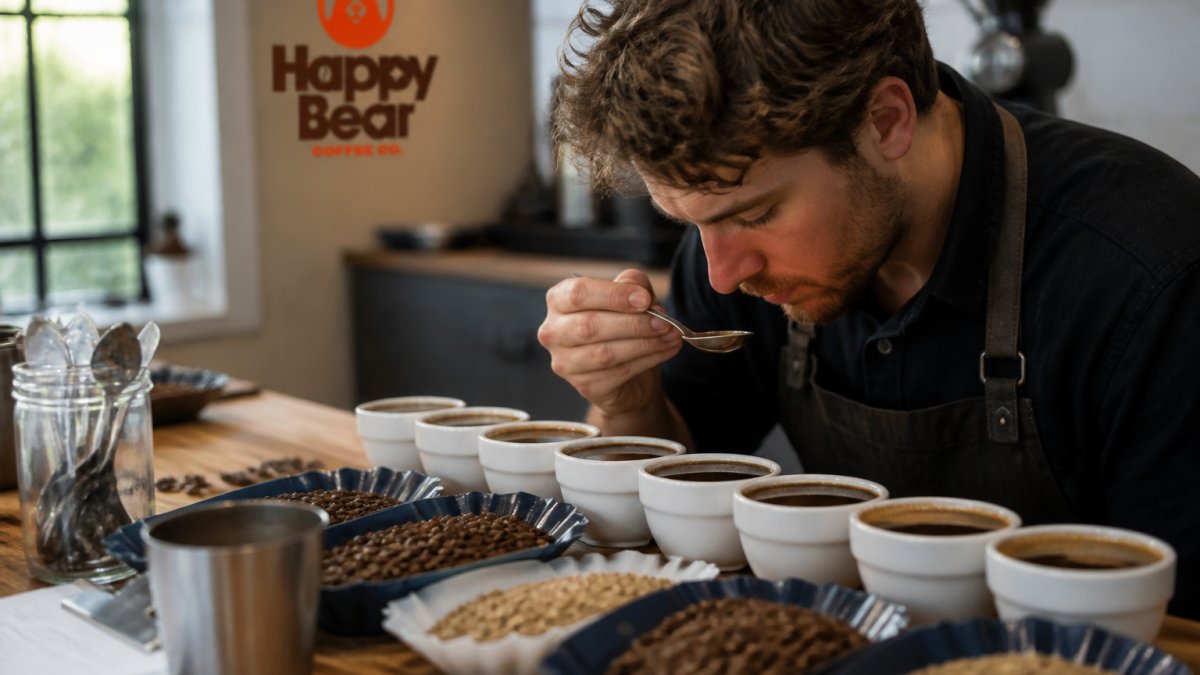
Specialty coffee refers to beans that score 80 points or higher on the Specialty Coffee Association's 100-point scale. The evaluation measures flavor complexity, balance, acidity, body, and the absence of defects. To achieve an 80+ score, a coffee must be evaluated by a certified SCA cupper who tastes the coffee blind and scores it across multiple dimensions: fragrance/aroma, flavor, aftertaste, acidity, body, balance, uniformity, clean cup, sweetness, and overall impression.
Regular coffee, what the industry calls commodity coffee, has no such standard. It's graded by size and moisture content, not flavor. The Specialty Coffee Association does not evaluate commodity coffees; they are instead graded by the New York "C" contract standards, which measure physical characteristics (bean size, defect count, moisture) but not taste.
Quality Metrics: A Side-by-Side Comparison
The most concrete difference between specialty and commodity coffee is defect tolerance:
- Specialty coffee (80+ SCA score): Allows 0-3 full defects per 300-gram sample. A full defect is a bean with visible damage (insect damage, mold, fermentation damage, or physical defects). Quakers (unripe beans that don't roast properly) are counted as half-defects.
- Commodity coffee (no SCA evaluation): Allows 40-100+ defects per 300-gram sample, depending on grade. A "Grade 2" commodity coffee might contain 40-80 defects per sample; a "Grade 3" might contain 80-160 defects per sample.
In practical terms: a pound of specialty coffee might contain 0-1 defective bean; a pound of commodity coffee might contain 10-30 defective beans. Those defects create off-flavors, musty, moldy, or sour notes, that mask the coffee's origin character.
Flavor Profile Differences
The difference in cup quality is immediate and measurable. Specialty coffee tastes cleaner, brighter, and more nuanced. You can taste the origin: the fruity notes of Ethiopian Yirgacheffe (often scoring 82-86 points), the chocolate and nuttiness of Jamaican Blue Mountain (often 84-88 points), or the caramel sweetness of Peruvian coffee (often 82-85 points). Commodity coffee tastes generic, roasted to mask defects rather than highlight origin character.

This distinction matters because it justifies the price. When you pay more for specialty coffee, you're paying for measurable quality differences, not just a brand name. The flavor is objectively more complex because defects have been removed. The sourcing is traceable because specialty producers document origin, altitude, processing method, and harvest date. The environmental and labor practices are documented because specialty coffee producers compete on transparency.
Single-Origin vs. Specialty: Two Different Classifications
It's important to note that specialty coffee and single-origin coffee are not the same thing. A coffee can be specialty-grade and single-origin, or it can be commodity-grade and single-origin. Similarly, a coffee can be specialty-grade and a blend, or commodity-grade and a blend.
Single-origin simply means the coffee comes from one country, region, or farm. A single-origin coffee is traceable to a specific geographic source. Single-origin coffees are priced higher than blends because they offer a distinct flavor profile tied to that origin's terroir (climate, altitude, soil). A single-origin Ethiopian coffee costs more than a generic blend, but a single-origin commodity-grade Ethiopian coffee still costs less than a specialty-grade blend.
Specialty-grade refers to the cup score and defect count, not the origin. A specialty-grade coffee can be a single-origin (one farm, one region) or a blend (multiple origins combined). The specialty grade guarantees quality and flavor complexity; the single-origin designation guarantees traceability and origin character.
Understanding this distinction helps explain price variation. A $12 pound of specialty-grade Ethiopian single-origin coffee is expensive because it's both specialty-grade (high quality, low defects) and single-origin (traceable, distinctive). A $8 pound of commodity-grade Ethiopian single-origin coffee is cheaper because, while it's traceable to Ethiopia, it may contain defects and lack the flavor complexity of specialty-grade beans. A $10 pound of specialty-grade blend is priced between the two because it's specialty-grade (high quality) but lacks the single-origin premium.
Fair Trade vs. Direct Trade Coffee: Where Your Money Goes
Two models attempt to ensure that coffee farmers receive fair compensation: Fair Trade and Direct Trade.
Fair Trade is a certification system. Farmers who meet Fair Trade standards receive a guaranteed minimum price, typically above the commodity market price. Fair Trade also requires investment in community projects, schools, healthcare, infrastructure. The certification is audited by third parties.
Fair Trade works, but it's a floor, not a ceiling. A farmer receiving Fair Trade prices earns more than commodity farmers, but the certification doesn't guarantee prosperity. Fair Trade also adds administrative costs and certification fees that increase the final price.
Direct Trade cuts out middlemen. Roasters buy directly from farmers or farmer cooperatives, often at prices well above Fair Trade minimums. Direct Trade relationships are built on long-term partnerships and transparency. A roaster using Direct Trade coffee can often tell you the exact farm, the farmer's name, and how much they paid per pound.
Direct Trade typically results in higher prices for consumers because more of the money goes directly to farmers. There's no certification body taking a cut. The roaster's margin is often smaller because they're buying at higher cost but passing that cost to customers who value the transparency.
Is Specialty Coffee Worth the Extra Cost?
The answer depends on what you value.
If you drink coffee for caffeine and don't care about flavor, specialty coffee isn't worth the premium. Commodity coffee delivers caffeine just fine, and the taste difference won't matter to you.
If you care about flavor, if you notice the difference between a clean, bright cup and a flat, bitter one, specialty coffee is absolutely worth it. You're not paying for a label; you're paying for a measurably better product.
If you care about how your money flows through the supply chain, specialty coffee aligns with your values. Fair Trade and Direct Trade models ensure farmers earn living wages. Environmental practices in specialty coffee regions tend to be more sustainable than commodity operations.
The cost-per-cup math also shifts when you brew at home. A pound of specialty coffee costs more, but it makes 16 cups. That's roughly $1.25 per cup at home, compared to $5-6 for a café specialty drink. Home brewing with quality beans is actually cheaper than buying specialty coffee at coffee shops.
How to Buy Specialty Coffee on a Budget
You don't need to spend premium prices to access specialty coffee. Several strategies make it more affordable.
Buy whole beans and brew at home. This is the single biggest cost-saver. A café charges $5-6 for a specialty drink; brewing at home costs a fraction of that. Invest in a basic grinder and brewing method, a French press or pour-over setup costs under $30 and lasts years.
Buy in bulk when possible. Many specialty roasters offer subscription services that give you flexibility to pause months when you need to. Buying multiple bags at once sometimes qualifies for discounts or bundled pricing.
Try single-origin coffees from less famous regions. Beans from Peru or Tanzania cost less than Jamaican Blue Mountain or Hawaiian Kona, but they're still specialty-grade with complex flavor profiles. Explore origins beyond the premium-priced names.

Mix specialty with regular coffee. Blend a specialty single-origin with a less expensive bean for daily drinking, and reserve the premium coffee for weekend brewing when you have time to appreciate it. This stretches your specialty coffee budget significantly.
Look for subscription flexibility. Happy Bear Coffee's customizable bundle subscriptions let you choose what you want and pause anytime. You're not locked into paying for coffee you don't need, which makes specialty coffee more accessible for budget-conscious buyers.
Specialty coffee more expensive reflects real differences in how it's grown, harvested, processed, and sourced. Understanding those differences helps you make informed choices about where your money goes and what you're actually paying for. If you value flavor, quality, and fair compensation for farmers, specialty coffee delivers on all three. If you're ready to explore specialty coffee without breaking the budget, Happy Bear Coffee's range of single-origin beans and flexible subscriptions make it easy to start. Shop our collection and discover why specialty coffee worth the investment for coffee enthusiasts who care about what's in their cup.
Frequently Asked Questions
What makes specialty coffee more expensive than regular coffee?
Specialty coffee costs more because of stricter quality standards, hand-picking at higher altitudes, meticulous processing, and traceability. Beans are graded for defects and cup quality, with specialty coffee scoring 80+ on a 100-point scale. Single-origin specialty coffees also command premiums due to their unique flavor profiles and limited supply from specific growing regions.
Is specialty coffee worth the extra cost?
That depends on your priorities. If you value flavor complexity, origin traceability, and knowing your coffee supports farmers fairly, specialty coffee delivers measurable differences. Single-origin beans like Tanzania Peaberry or Jamaican Blue Mountain offer distinct taste experiences commodity coffee cannot match. For casual drinkers, the difference may not justify the price; for enthusiasts, it's essential.
How much of the specialty coffee price actually reaches farmers?
Direct trade relationships typically send 25-40% of the retail price back to farmers, compared to 5-15% in commodity markets. Fair trade certification guarantees a minimum floor price, while direct trade builds ongoing relationships and transparency. Specialty coffee companies that emphasize sustainable sourcing ensure farmers receive compensation that reflects their labor and quality.
What affects coffee prices the most?
Supply and demand, climate events, altitude, and processing method are the biggest drivers. Extreme weather in major growing regions reduces yields and raises prices. High-altitude coffee requires more labor and care, increasing costs. Processing methods like natural fermentation add time and skill. Fair trade and direct trade premiums also increase prices compared to commodity coffee traded on global markets.