 How-to
Water Temperature and Coffee Extraction: A Brewing Guide
Quick Summary
Water temperature controls how quickly coffee extraction happens, because hotter water dissolves compounds faster and cooler water extracts more slowly. Most brewers aim for roughly 195°F to 205°F as a starting point, adjusted for roast level and brewing method.
- A Scientific Reports study describes 92-96°C (about 198-205°F) as a range considered necessary for proper extraction.
- Light roasts often do well at the higher end of the range, while dark roasts often do better slightly lower.
- Cold brew steeps below 25°C (77°F) over a long period, producing a smoother, less acidic cup.
- Change one variable at a time, and adjust temperature in small steps of about 5°F when troubleshooting.
- Sour, weak, and thin cups point to under-extraction, while harsh, bitter, and dry cups point to over-extraction.
Table of Contents
- How Does Water Temperature Affect Coffee Extraction?
- Coffee Brew Temperature Chart and Recommended Ranges
- Best Water Temperature for Pour-Over Coffee and Espresso Brewing Temperature
- Coffee Extraction Troubleshooting: Adjusting Temperature for Better Cups
- Frequently Asked Questions
How Does Water Temperature Affect Coffee Extraction?
Water temperature is one of the main levers controlling how much flavor leaves your grounds. Hotter water pulls out compounds faster; cooler water extracts more slowly. Temperature sets the stage for everything else in the cup.
Extraction is the process of dissolving soluble compounds, acids, sugars, oils, and aroma- and body-giving substances, from ground coffee into water. Temperature controls how quickly this happens.
A Scientific Reports study on brew temperature and extraction describes 92-96°C (about 198-205°F) as a range considered necessary for proper extraction.
Temperature is only one variable. Grind size, brew time, and coffee-to-water ratio all shape the final cup, so change one thing at a time when you test.
Coffee Brew Temperature Chart and Recommended Ranges
Most brewers aim for roughly 195°F to 205°F. Use this as a starting point, then adjust to taste.
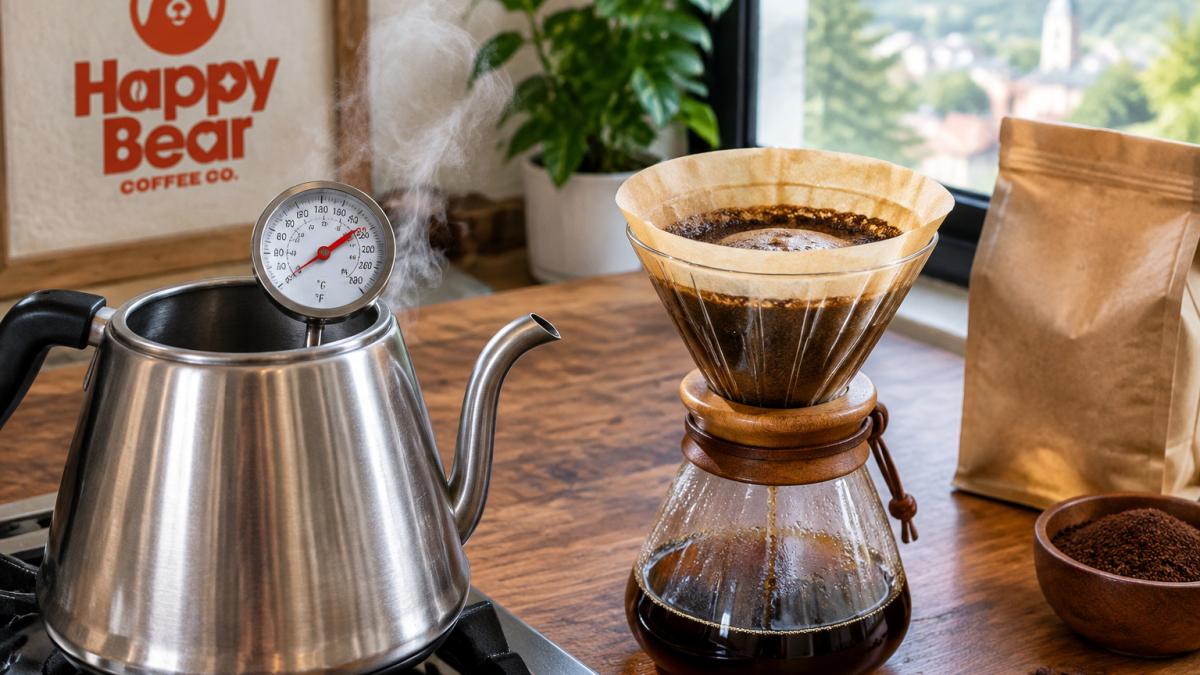
- Light roasts: Often do well at the higher end of the range.
- Dark roasts: Often do better slightly lower to avoid harsh, roasty flavors.
- Cold brew: Steeps below 25°C (77°F) over a long period, producing a smoother, less acidic cup.
Temperature is not the only factor in how a cup tastes. Brew strength and extraction level matter too.
The article gives a starting range and notes how roast level shifts the best temperature.
| Brew type | Temperature guidance | Note |
|---|---|---|
| General brewing | Roughly 195°F to 205°F | Starting point, adjust to taste |
| Light roasts | Higher end of range | Often do well near the top |
| Dark roasts | Slightly lower | Avoids harsh, roasty flavors |
| Cold brew | Below 25°C (77°F) | Long steep, smoother, less acidic |
Best Water Temperature for Pour-Over Coffee and Espresso Brewing Temperature
Method matters as much as the number on your kettle. The same 200°F water behaves differently in a pour-over cone than in a French press, because contact time, agitation, and thermal mass change how much heat reaches the grounds.
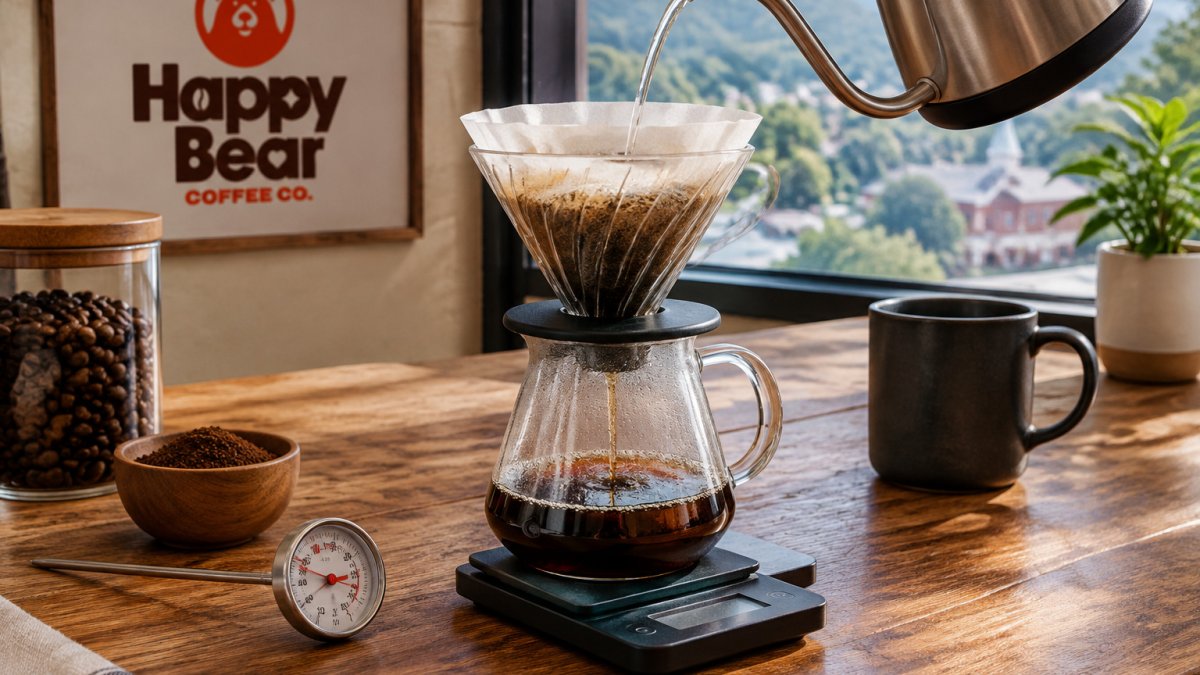
Pour-over (V60, Chemex, Kalita, flat-bed brewers): Start at 200°F. Lighter roasts show fruity and floral notes best near 202-205°F; darker roasts taste cleaner around 195-198°F. Pour-over loses heat fast, so a preheated cone and temperature-holding kettle matter more here than in any other method.
Espresso: Machines control brew temperature, so aim for consistency at the target setting for each shot. Most practitioners set 198°F to 204°F, lighter roasts toward the top and darker toward the bottom. Adjust grind first, since it affects extraction more directly than small temperature shifts.
Immersion and French press: Full submersion for 4-5 minutes makes immersion more forgiving of temperature variation. Start at 195-200°F; a coarser grind and full immersion mean you can often brew a few degrees cooler without losing sweetness.
AeroPress: The short contact time (1-2 minutes) and fine grind reward water at the higher end, 195-205°F, especially for light roasts. Preheating the chamber helps hold temperature through the press.
Batch brewing: Follow the manufacturer's target, typically 195-205°F at the showerhead. Batch brewers vary widely in thermal stability, so check the actual slurry temperature rather than trusting the display.
Measuring and controlling temperature: A digital instant-read thermometer in the kettle or slurry beats a kettle display. Preheating the brewer, keeping the lid on between pours, and brewing in a warm room all reduce heat loss. For pour-over, water at the start of the pour is usually a few degrees hotter than the slurry by the end, normal, but a large drop signals you need to preheat more or pour faster.
Coffee Extraction Troubleshooting: Adjusting Temperature for Better Cups
Most temperature advice stops at "raise it if sour, lower it if bitter." That is a starting point, not a workflow. Use this sequence and change one variable at a time.
Step 1, Taste and name the defect. Sour, weak, and thin point to under-extraction. Harsh, bitter, dry, and ashy point to over-extraction. Muddy or hollow cups can be either, so taste again after the coffee cools slightly.
Step 2, Hold everything else constant. Before touching temperature, confirm dose, grind, water, and brew time match your last brew. Change two variables at once and you cannot tell which one fixed the cup.
Step 3, Adjust temperature in small steps. Raise or lower the water by about 5°F, brew again, and compare. If the defect persists after two temperature steps, the problem is more likely grind or brew time.
Step 4, Adjust grind and time only after temperature. Still sour at the top of the range? Grind finer or extend brew time. Still bitter at the bottom? Grind coarser or shorten brew time.
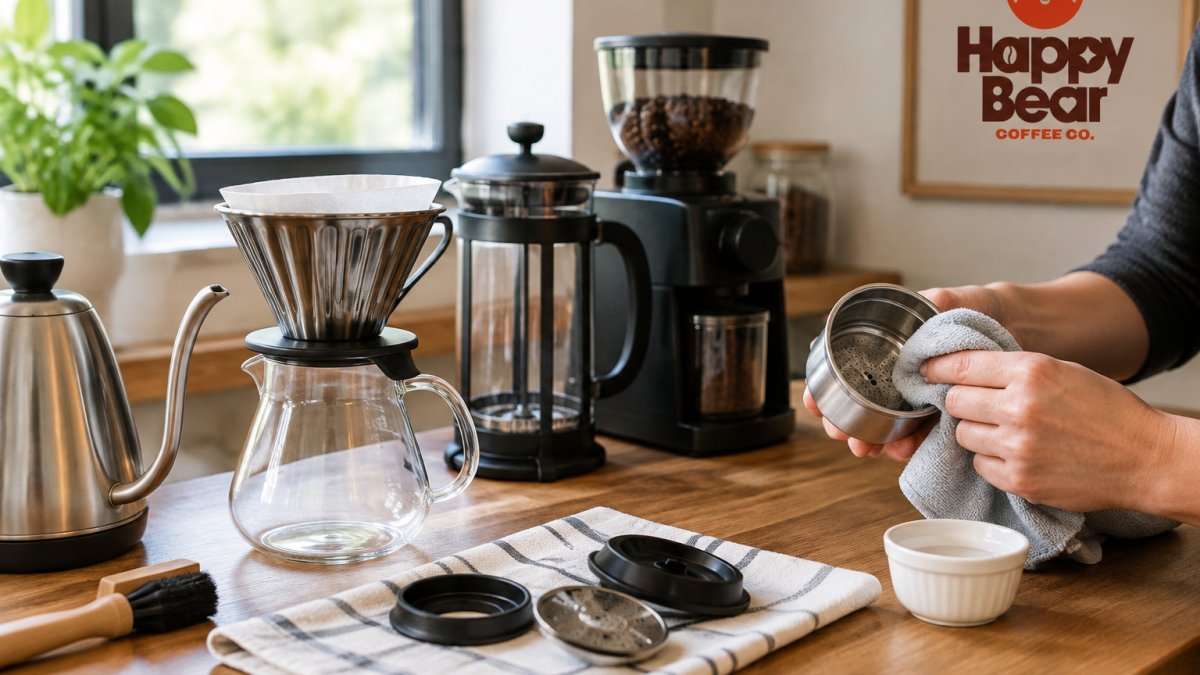
Step 5, Clean the equipment. Dirty or scaled equipment throws off results, so keep your brewer clean to read temperature effects accurately. If you are planning a larger event and want a hands-off option, Happy Bear Coffee's Coffee cart for corporate events, weddings and community events is one place to look.
A controlled side-by-side test: Brew two cups with identical dose, grind, water, and brew time, one at 195°F and one at 205°F. Taste both at the same serving temperature to isolate temperature's effect in your setup.
Separate extraction from perception. Brew temperature changes what is extracted; tasting temperature changes what you perceive. A cup tasted hot reads more bitter and roasty, while the same cup tasted warm reads sweeter and more acidic. Always compare cups at the same serving temperature before concluding a brew-temperature change helped.
Water composition and equipment interactions. Mineral content, brewer design, thermal stability, and batch size all influence results, so no single temperature works for every setup. Treat any recommended range as a starting point for your equipment, not a universal answer.
Happy Bear Coffee's Single-serve coffee brew bags are a simple option for travelers, office workers and campers who want a consistent cup without extra gear.
Frequently Asked Questions
What is the perfect temperature for coffee extraction?
Brewing guidance commonly cites 92 to 96 degrees Celsius, about 198 to 205 degrees Fahrenheit, as the range considered necessary for proper extraction. A 2020 Scientific Reports study describes this range in relation to total dissolved solids and extraction percentage. The same study found that, at fixed brew strength and extraction, brew temperature had little impact on the sensory profile of drip coffee. So the target range is a useful starting point, but grind size, coffee-to-water ratio and brew time also shape the final cup and should be adjusted alongside temperature.
Does hotter water make stronger coffee?
Not necessarily. Hotter water tends to dissolve more compounds faster, which can raise extraction, but strength depends on how much coffee you use and how fine it is ground. Research on drip brewing held brew strength and extraction constant and found little sensory difference across temperatures. If your coffee tastes weak, first check your coffee-to-water ratio and grind size before raising the temperature. Overly hot water can also push a cup toward bitterness, especially with dark roasts.
What happens when brewing water is too cool?
Water that is too cool extracts less from the grounds, which usually produces under-extracted coffee. Under-extracted coffee often tastes sour, thin or sharp, because the acids are pulled out more readily than the sugars and body. To fix it, check that your kettle or machine reaches the target range, preheat your brewer and equipment, and consider a finer grind or a longer brew time. Measuring the water temperature directly, rather than trusting the dial, is the most reliable way to confirm the setting.