 How-to
How to Adjust Coffee Temperature for Sour Taste: A Brewing Guide
Quick Summary
To fix sour coffee caused by low coffee temperature, raise your water temperature in small steps, starting from a roast-based baseline of about 200°F for medium roasts. Change only one variable per brew and measure the slurry temperature with a thermometer, since the kettle dial can read higher than the water reaching the grounds.
- Sourness usually means under-extraction, which cooler water can cause.
- Start near 205°F for light roasts, 200°F for medium and 195°F for dark.
- Raise water temperature in 3°F to 5°F steps rather than jumping to the top.
- Measure the slurry temperature, because kettle heat is lost before reaching the grounds.
- Taste coffee hot and at room temperature to tell brewing problems from serving problems.
Table of Contents
- How to Adjust Coffee Temperature for Sour Taste
- Why Coffee Tastes Sour: Under-Extraction Explained
- Best Water Temperature for Coffee Brewing
- Pour-Over Coffee Brewing Temperature: Adjusting by Method
- Coffee Grind Size for Sour Coffee and a Step-by-Step Troubleshooting Sequence
- Start Your Next Brew at the Right Temperature
- Frequently Asked Questions
How to Adjust Coffee Temperature for Sour Taste
Sour coffee is usually a sign of under-extraction, and water temperature is one of the easiest variables to adjust. The fix is rarely complicated, but it does require changing one thing at a time.
Coffee temperature matters because hotter water pulls more flavor from the grounds. Cooler water tends to pull out the bright, sharp acids first and leaves the sweeter, rounder flavors behind.
- Check that your coffee tastes sour, not just acidic
- Raise your water temperature in small steps
- Change only one variable per brew so you know what worked
Why Coffee Tastes Sour: Under-Extraction Explained
Sourness in coffee usually comes from under-extraction. Water did not dissolve enough of the compounds in the grounds, so the sharp acids dominate the flavor.
Several things can cause this:
- Water that is too cool
- A grind that is too coarse
- A brew time that is too short
Sour and bright are not the same. Desirable acidity tastes fruity and clean. Under-extracted sourness tastes thin, puckering and a little unpleasant.
Under-extracted coffee symptoms to watch for
Look for these signs in your cup:
- A sharp, puckering sourness on the sides of your tongue
- A thin body that feels watery
- A short, dry finish with little sweetness
- Flavors that taste like lemon peel or vinegar rather than fruit
Best Water Temperature for Coffee Brewing
A commonly cited brew-water window is roughly 195°F to 205°F. That range is a starting bracket, not a single answer. The temperature that fixes a sour cup depends on your roast level, your brewing method, and how much heat your setup loses between the kettle and the coffee bed.
Start with the roast, then adjust
- Light roasts: Start near 205°F. Dense, lightly developed beans resist extraction, so hotter water helps dissolve the sugars that balance acidity.
- Medium roasts: Start around 200°F. This is the middle of the range and a sensible baseline for most bags.
- Dark roasts: Start around 195°F. Dark roasts are more soluble and release bitter compounds quickly, so cooler water protects the cup from turning harsh.
If your coffee tastes sour at your usual temperature, move up in 3°F to 5°F steps rather than jumping to the top of the range. A 5°F change is often enough to shift a thin, puckering cup toward sweetness without pushing it into bitterness.
Measure the water, not the kettle
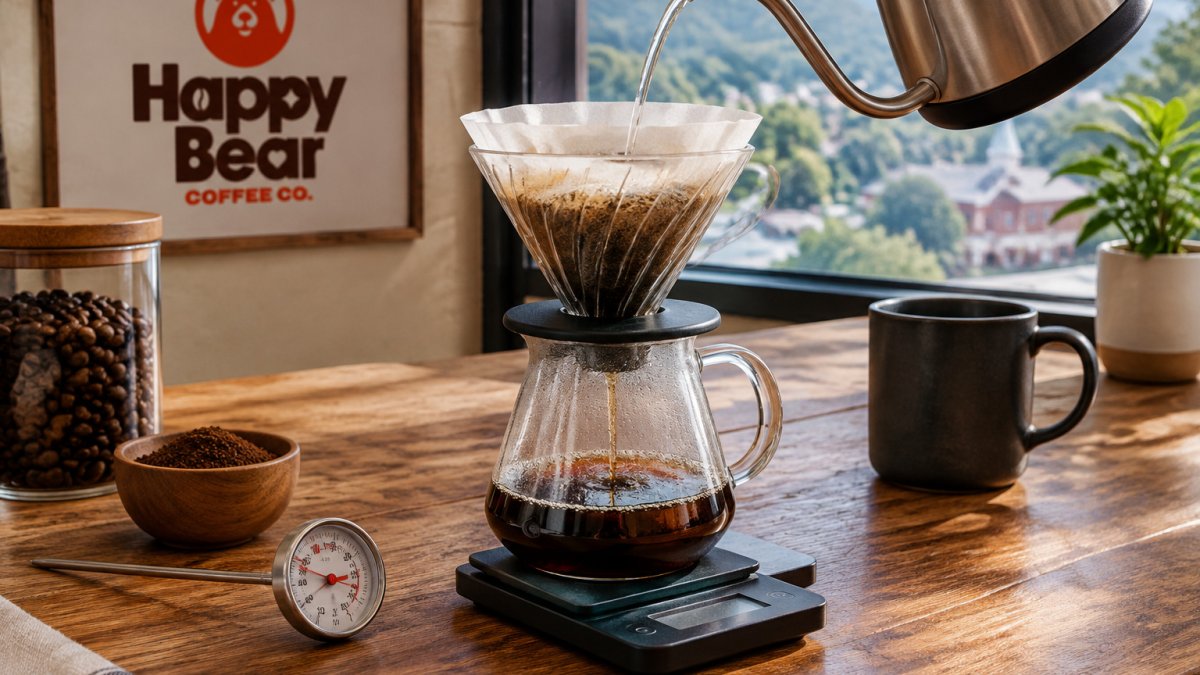
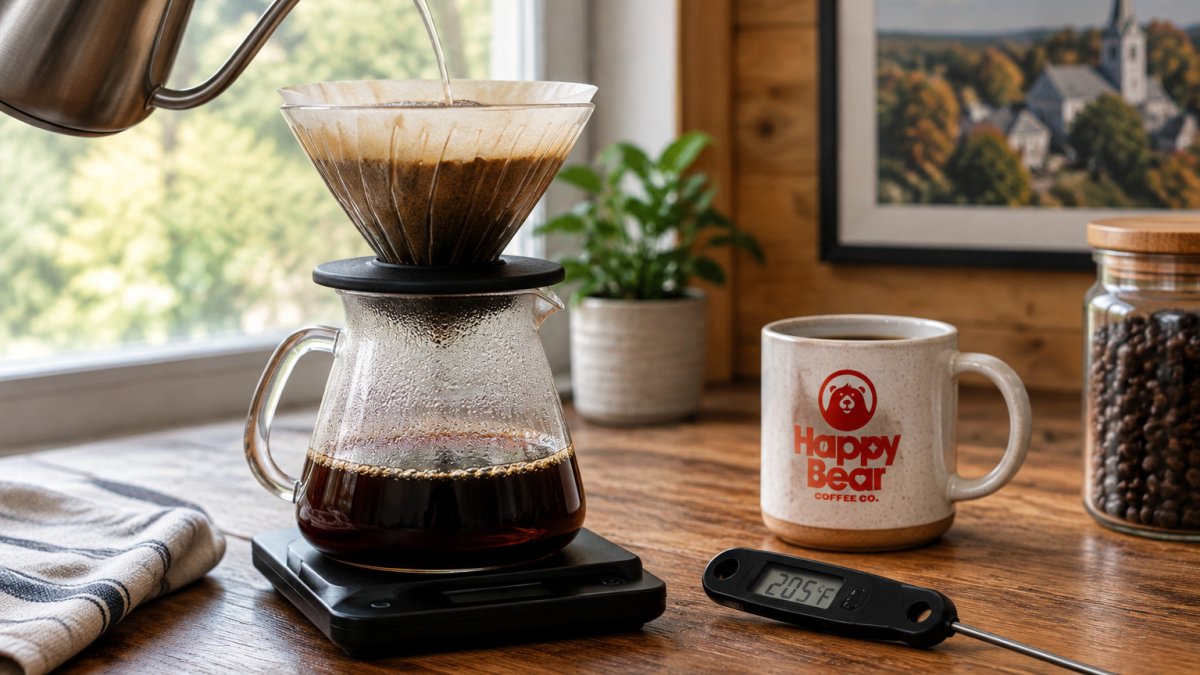
The number on a kettle dial is not the temperature at the coffee bed. A gooseneck kettle loses heat as water travels through the spout and as it hits room-temperature grounds. A digital thermometer in the slurry gives you the real reading.
A common pattern among home brewers:
- Heat water to your target plus about 5°F to account for loss.
- Pour a small amount to preheat the dripper and rinse the filter, then discard it.
- Brew and check the slurry temperature with a thermometer mid-pour.
- Note the difference between your kettle setting and the slurry reading, then adjust the kettle next time.
Why the top of the range is not automatically better
Hotter water extracts more of everything, including the bitter compounds that appear late in the brew. Pushing to 205°F or above can rescue an under-extracted light roast, but it can also make a medium or dark roast taste dry and ashy. The goal is the lowest temperature that removes the sourness while keeping sweetness intact, not the highest number your kettle will reach.
Cooling is a separate temperature problem
If your coffee tastes sour only after it has sat for several minutes, brewing temperature may not be the cause. As a cup cools, the perception of acidity often increases while sweetness and aroma fade. Taste the coffee at brewing temperature and again after it cools to room temperature before you change your recipe. If it is balanced hot and sharp when cool, the issue is serving temperature, not extraction.
Starting brew water temperature by roast level (°F)
Pour-Over Coffee Brewing Temperature: Adjusting by Method
Pour-over brewers have the most control over temperature. Because water flows through the grounds quickly, a few degrees can change the cup noticeably.
Try these starting points:
- Light roasts: Use water closer to 205°F (96°C), since they need more heat to extract fully.
- Medium roasts: Start around 200°F (93°C) and adjust from there.
- Dark roasts: Use cooler water, around 195°F to 200°F (90°C to 93°C), to avoid harsh bitterness.
Pour slowly and keep the bed of coffee evenly wet. A digital thermometer helps you hit your target every time.
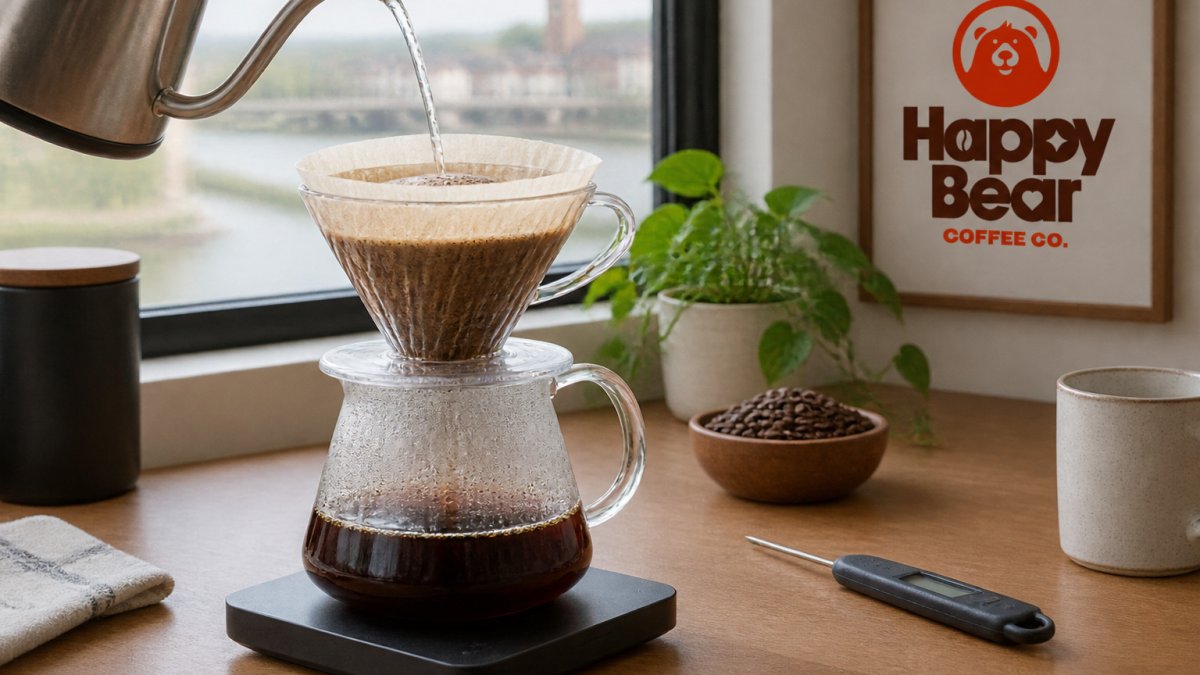
Here is how starting temperature points differ by roast level for pour-over brewing.
| Roast level | Starting water temperature | Note |
|---|---|---|
| Light roast | 205°F (96°C) | Needs more heat to extract fully |
| Medium roast | 200°F (93°C) | Adjust from this starting point |
| Dark roast | 195°F to 200°F (90°C to 93°C) | Cooler water avoids harsh bitterness |
Coffee Grind Size for Sour Coffee and a Step-by-Step Troubleshooting Sequence
Grind size changes how quickly water reaches the soluble compounds in the grounds. A finer grind exposes more surface area, so extraction speeds up and sourness usually drops. But grind is only one lever, and changing it alongside temperature without a record of what you did leaves you guessing.
First, decide whether the cup is actually under-extracted
Bright acidity and under-extracted sourness can feel similar, so check the cup before you touch the grinder.
- Desirable acidity tastes fruity or juicy, sits in the middle of the sip, and comes with sweetness and a clean finish.
- Under-extracted sourness tastes sharp or puckering, feels thin and watery, and finishes dry with little sweetness.
If the cup is bright but sweet, your recipe is working and you should leave it alone. If it is sharp and hollow, continue with the sequence below.
A controlled troubleshooting sequence
Change one variable per brew and record each attempt. A simple notebook entry with dose, water temperature, grind setting, brew time, and taste notes is enough.
- Record your baseline. Note the dose in grams, the water temperature, the grind setting, and the total brew time, then describe the cup in three words.
- Raise the water temperature by 3°F to 5°F. Brew again with everything else unchanged and compare.
- If still sour, grind finer. Move one or two clicks on a stepped grinder, or a small turn on a stepless one, and brew again.
- If still sour, extend contact time. For pour-over, slow the pour slightly; for immersion, add 30 seconds before you break the crust or plunge.
- If the cup turns bitter or dry, back off one step. You have passed the balance point, so return to the previous setting.
- Lock in the recipe. Write down the final dose, temperature, grind, and time so you can repeat it with the next bag.
Watch out: If you change temperature and grind in the same brew, you will not know which one fixed the cup, and you may overshoot into bitterness on the next attempt.
Grind adjustments by brewing method
- Pour-over: Small grind changes have a large effect because water passes through the bed quickly. Move one setting at a time.
- Immersion: Full-immersion brewing is more forgiving, so grind changes matter less than contact time and temperature.
- Espresso: Grind is the primary extraction lever. Adjust in very small increments and keep dose and yield constant while you test.
- Drip: Most drip machines offer limited grind control, so temperature and dose are usually easier adjustments than grind.
If you are choosing equipment to make grind adjustments easier, our guide to choosing a grinder with precise settings explains the options. Similarly, how burr and blade grinders differ can help you decide which type gives you the consistency you need. If you are still testing recipes and want to try different coffees without committing to full bags, single-serve brew bags let you compare roasts side by side.
Start Your Next Brew at the Right Temperature
Adjusting coffee temperature is one of the fastest ways to fix sour taste at home. Start with water near 200°F, change one variable at a time, and keep notes on what you tried.
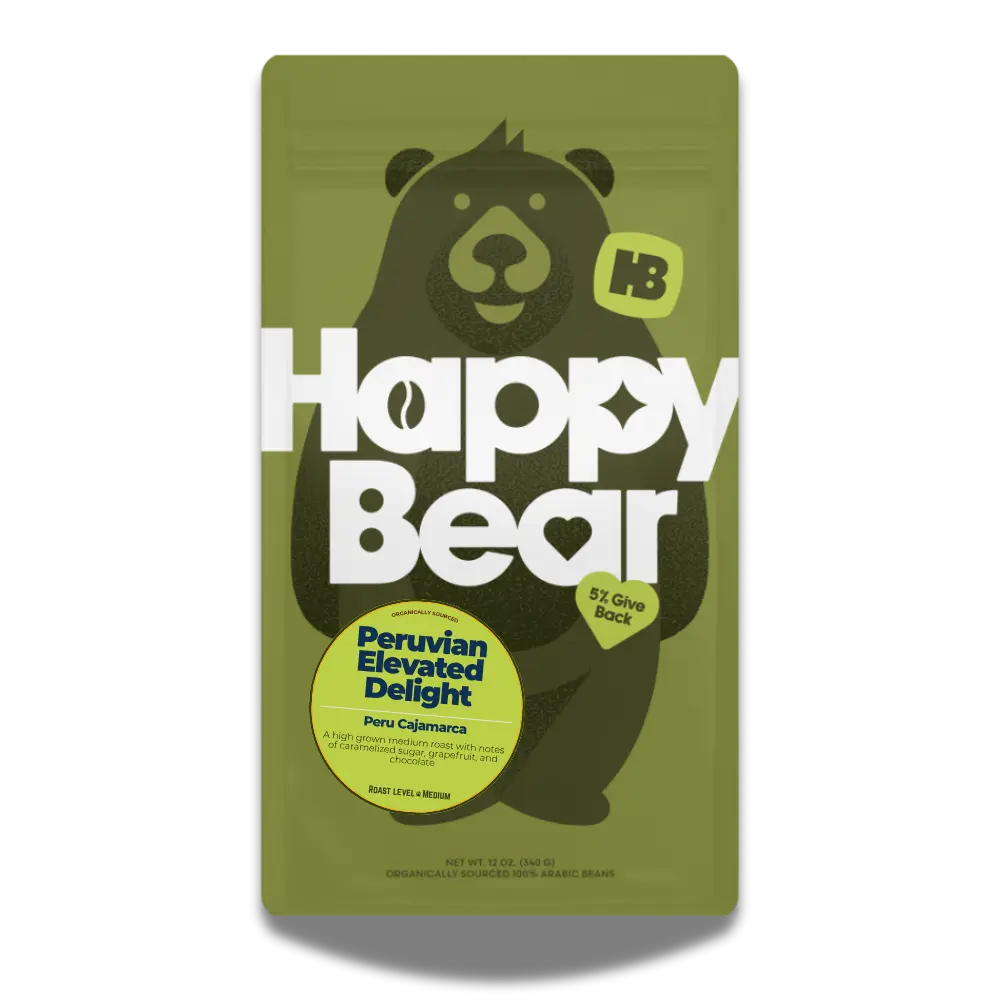
For a simple recipe you can repeat, read how to brew better coffee at home without a machine. When you are ready to try a new bean, our Peruvian Elevated Delight is a medium roast with notes of caramelized sugar and grapefruit that tastes balanced across a range of temperatures.
Frequently Asked Questions
How do I fix sour-tasting coffee?
Start by checking whether the coffee is under-extracted. Sour coffee often means the water did not pull enough flavor from the grounds. Raising brew water temperature into the commonly recommended range, or grinding slightly finer, can help. Change one variable at a time so you can tell which adjustment made the difference, and taste after each brew.
Can hotter water make coffee less sour?
Often, yes. Hotter water generally extracts more of the compounds that balance acidity, which can reduce sharp sourness when a brew is under-extracted. Brew temperature alone does not control everything, though. Brew strength and extraction also matter, so a small temperature change may not fix a coffee that is sour for other reasons.
Should I change brew temperature or grind size first?
Most brewers adjust temperature first because it is easy to change without altering the rest of the recipe. If the coffee is still sour after a temperature change, try a slightly finer grind. Keep the dose and brew time the same during each test so the results are easy to compare.
What temperature should I use if my coffee tastes sour?
If your coffee tastes sour, try brewing with water at the upper end of the commonly recommended range, roughly 195 to 205 degrees Fahrenheit, and taste the result. Adjust in small steps of a few degrees. Measure water temperature with a thermometer rather than guessing, since kettles and pour-over setups can lose heat quickly.